Read heat, monsoon, and wind together., Hot Well Arizona Dune Guide

Open desert, fast consequences

Read heat, monsoon, and wind together.

This is a cool-season destination that happens to be open all year. Treating it as a summer trip is the single worst planning decision available here.

Current conditions

Live readings load here when the forecast service responds. Everything below this panel applies either way.

Temperature
Check current
Feels like
Check current
Wind
Check current
Gusts
Check current
Sky
Check current

Riding read: verify on site. Wind and surface change faster than any forecast updates, and what you can see from camp is the current conditions.

Seven-day outlook

The seven-day outlook loads here. Open the National Weather Service forecast for the official version, which is the one to use for any decision that matters.

Live data from Open-Meteo, refreshed when the page loads. The National Weather Service is the official source. Open the NWS point forecast.

Late autumn to early spring is the season

Comfortable days, cold nights, and a hot soak waiting at the end of a ride. This is when Hot Well is at its best and it is why the place fills up on winter weekends while much of the country is shut down by snow.
Summer is a genuine hazard

Southern Arizona summer heat combined with physical activity, limited shade, no drinking water on site, and a long drive to a hospital is a serious combination. If you must come, ride at first light, stop well before midday, and treat the afternoon as unavailable. Do not plan a summer trip around the tubs.

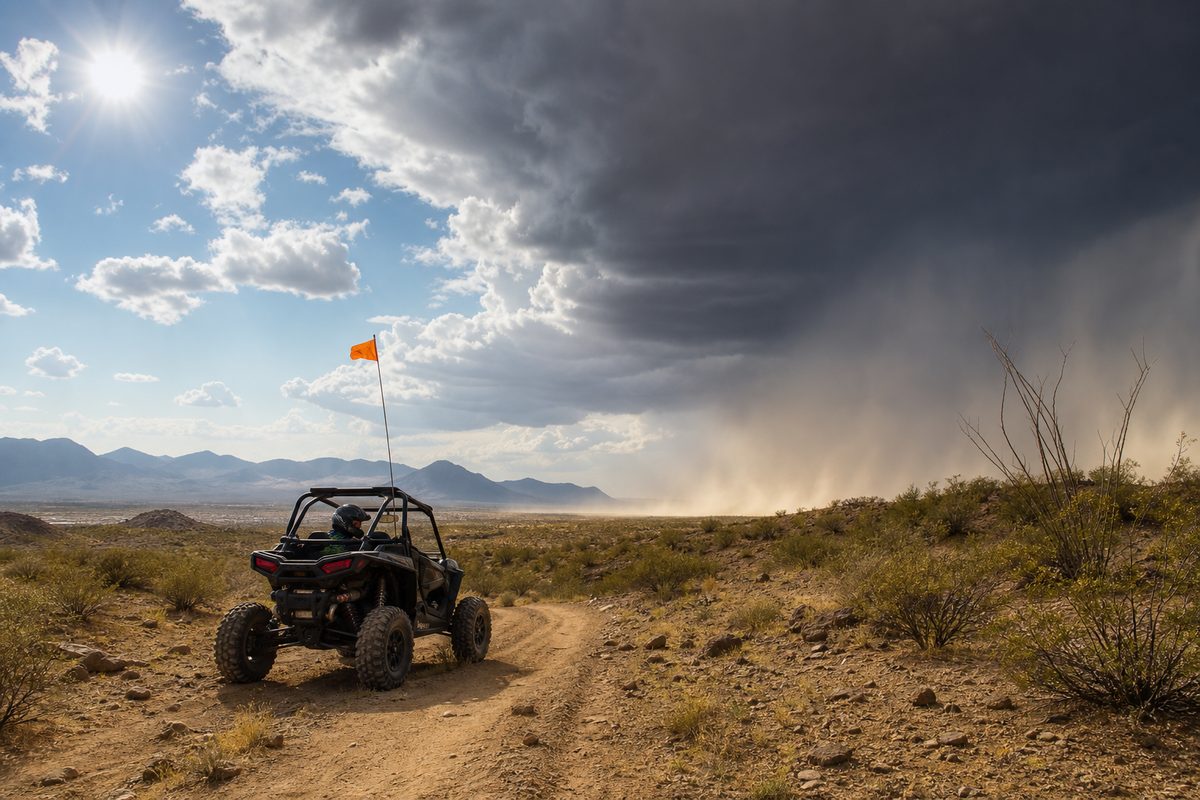
An Arizona monsoon storm cell dropping rain over distant hills while the ground at the dunes stays dry
Illustration of monsoon conditions. Not a documentary photograph.

Monsoon changes the ground rules

Roughly midsummer into early autumn, Arizona gets storms that dump water fast. The danger at Hot Well is not the rain overhead, it is the wash that fills from a storm you never saw, miles upstream. Never camp or shelter in a drainage, and wait out moving water rather than crossing it.

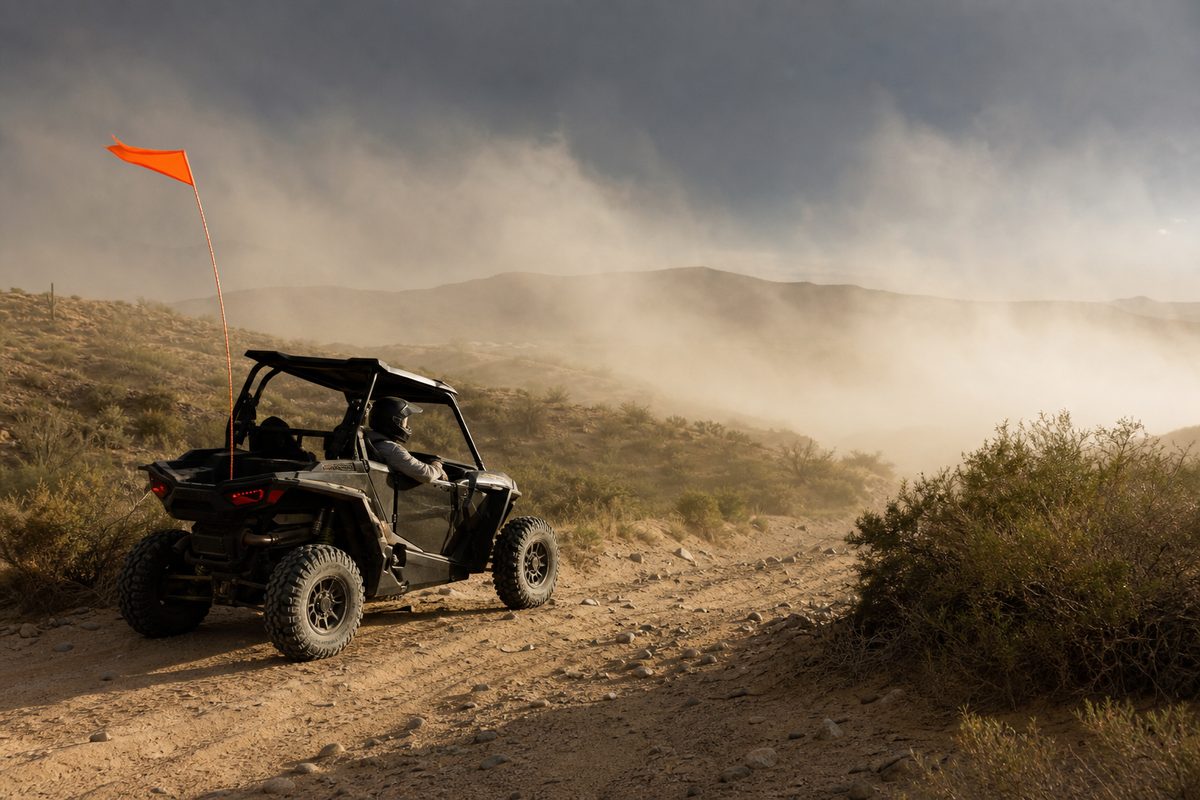
A side-by-side rider stops on a rocky desert trail as wind drives dust across the route and bends the orange whip flag
AI-generated interpretation of wind and dust conditions at Hot Well Dunes. Not a documentary photograph.

Wind and dust

Wind reshapes loose sand, cuts visibility, and can turn a dust cloud into a genuine hazard on mixed terrain where you are already relying on seeing other riders. Check sustained wind and gusts, then look at what the flags and the air are actually doing when you arrive.

Nights drop hard

Desert daytime warmth is not a forecast for the evening. Temperatures fall quickly after sunset in the cool season, and people who packed for a pleasant afternoon get cold fast. Bring layers even when the day looks warm, and remember the tubs drain around sunset.

Check fire restrictions with the forecast

Arizona restrictions tighten through the dry months and can prohibit campfires outright. The campground provides fire rings, which is not the same as a guarantee that fires are allowed the weekend you visit.

Let the site tell you

Forecasts are written for towns, and the recreation area sits out in open desert away from all of them. When you arrive, read the wind, the sky upstream of the washes, and the temperature of the sand before committing the group to a long loop.

Verify before travel. Conditions, zones, and regulations can change. Use the responsible agency's current information for final decisions.

Open the official BLM source →
Part of theDUNE GUIDE USA NETWORKIndependent dune guides. One place to start.