They were drilling for oil. They hit 106 degree water instead., Hot Well Arizona Dune Guide

An accident that never stopped

They were drilling for oil. They hit 106 degree water instead.

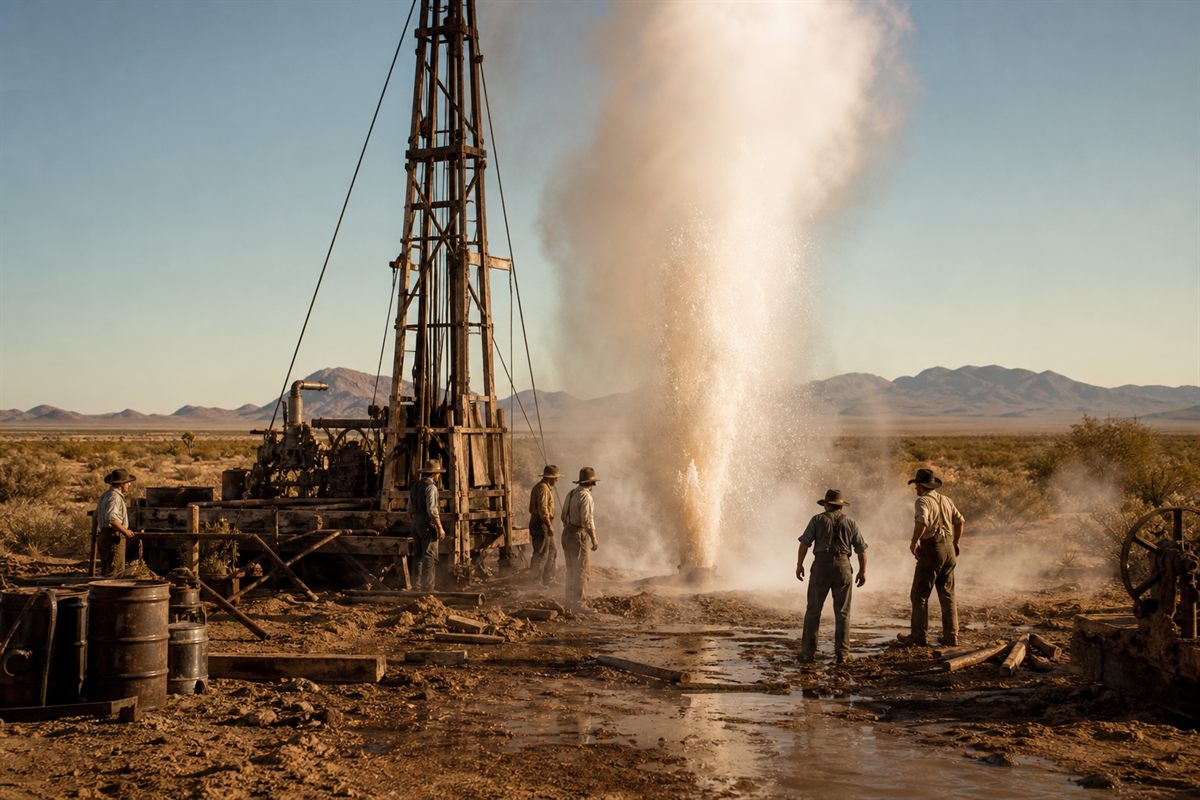
In 1928 a crew put a hole 1,920 feet into the desert floor looking for oil. What came back up was water at 106 degrees, and it has been coming up ever since. Nearly a century later people drive from three states to sit in it.

A 1928 drilling crew in the Arizona desert as hot water rather than oil comes up from the well
Historical interpretation of the 1928 hot-water strike. Not a documentary photograph.

A dry hole that was not dry

There is no oil under these dunes. The 1928 crew found that out the expensive way, at 1,920 feet, when the bit went into a pocket of hot water instead. By the standard of the job it was a failure. Nobody capped it, and the well has produced more than 250 gallons a minute at 106 degrees Fahrenheit from that day to this. The local paper has called Hot Well Dunes Graham County's beautiful mistake, which is about as fair a summary as anyone has managed.
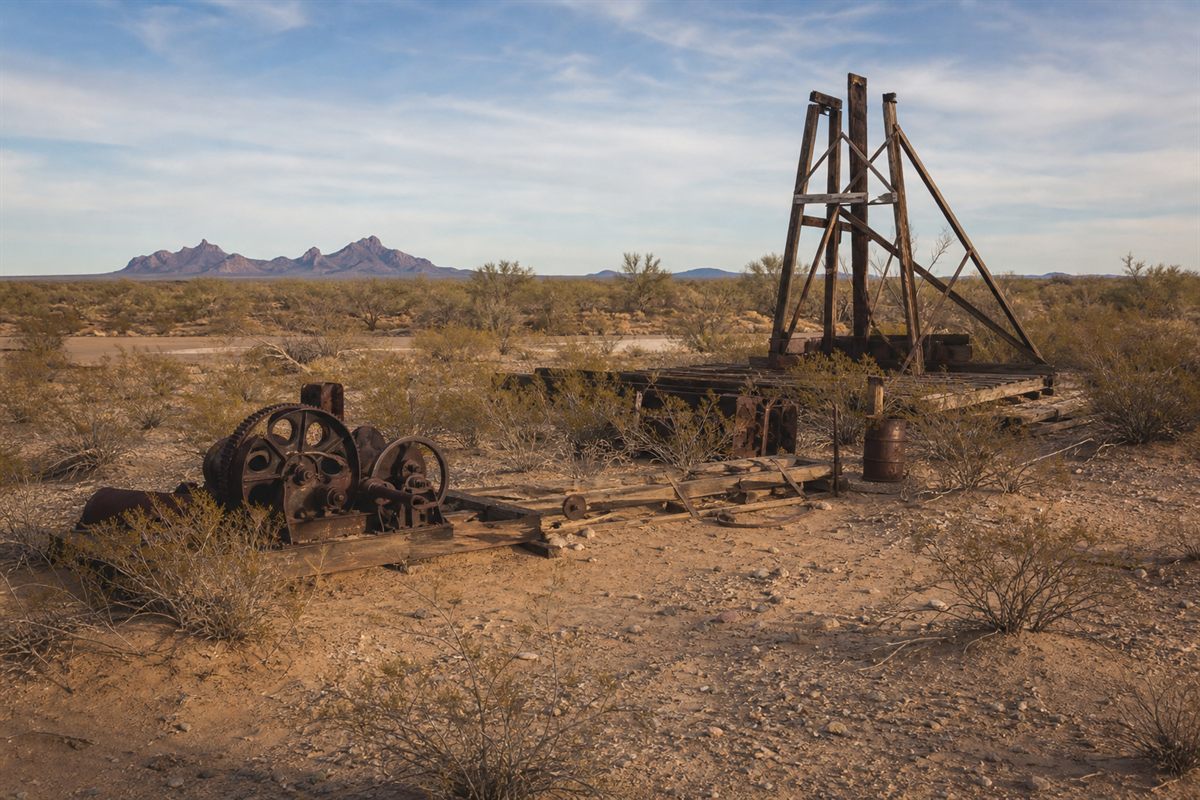
Rusted remains of the original 1928 drilling rig lying in the desert west of the Hot Well Dunes entrance road
Interpretation of the abandoned rig remains. Not a documentary photograph.

The wreck is still out there

You can go look at the equipment. What is left of the original drilling rig sits roughly a hundred yards west of the well, just off the entrance road, and it has been quietly rusting in the same spot for close to a hundred years. Most recreation areas interpret their history on a sign. This one left the evidence where it fell.

Sixty-five years of word of mouth

Between the accident and any kind of official status, nothing much happened here on paper. The water ran into the desert and people in the Gila Valley knew about it. The Bureau of Land Management established Hot Well Dunes as a recreation area in 1993, which is recent as public land goes. The place was a local secret for roughly sixty-five years before it was a destination, and some of that character is still in the campground.

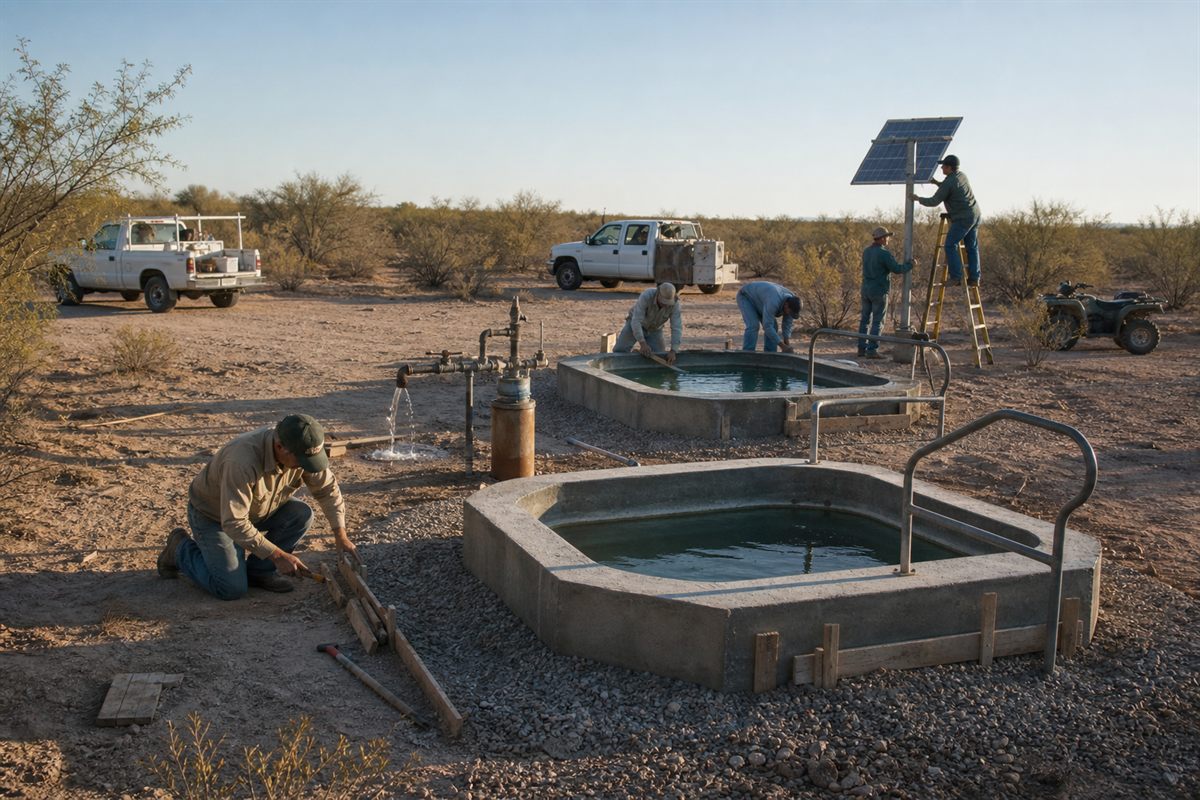
Construction of the soaking tubs, campground and vault toilets at Hot Well Dunes in the early 1990s
Historical interpretation of the early-1990s facility work. Not a documentary photograph.

Who actually paid for the tubs

The soaking tubs, the campground, the toilets, and the road work did not come out of general taxes. They were funded through grants from the Arizona State Parks Off-Highway Vehicle Recreation Fund and the Arizona Game and Fish Department Heritage Fund. That is OHV registration money and lottery money, put back into the ground riders use. When somebody complains about the sticker on the machine, this is a place you can point at.

How the tubs actually work

Two tubs sit near the wellhead, fed by the artesian flow with help from a solar pump. They drain every night and refill in the morning, which means they are typically full about an hour after sunrise and again about an hour before sunset. Plan the soak around that schedule instead of arriving at midnight expecting a hot tub. Keep glass and soap out of them. There is one water source here and everyone shares it.

The valley that came first

Long before the drilling rig, the Gila River made this country livable. Prehistoric farmers dug canals off the river across the Safford basin, and when settlers arrived in the 1870s they cleared and reused those same prehistoric channels rather than digging new ones. The town of Safford was laid out in the 1870s and named for Anson P. K. Safford, third governor of Arizona Territory. This is also Apache homeland, and the Gila Valley was contested ground long after the canals were reopened. The dunes sit south of all of it, on the dry edge of a valley that has always run on water.

Two thousand riding acres, and a reason to keep them

The 2,200-acre Recreation Area includes roughly 2,000 acres of low, sparsely vegetated terrain open to riding inside the fence, and it now takes in more than 20,000 visitors a year on a $3 vehicle fee or a $30 annual pass from the Safford Field Office. That is a lot of traffic for a place that exists by accident. The vegetation between the dunes takes years to recover from one careless line, and the tubs only work if people treat them as shared. Riding inside the open routes and leaving the water clean is the whole cost of keeping this.

Verify before travel. Conditions, zones, and regulations can change. Use the responsible agency's current information for final decisions.

Open the official BLM source →
Part of theDUNE GUIDE USA NETWORKIndependent dune guides. One place to start.